
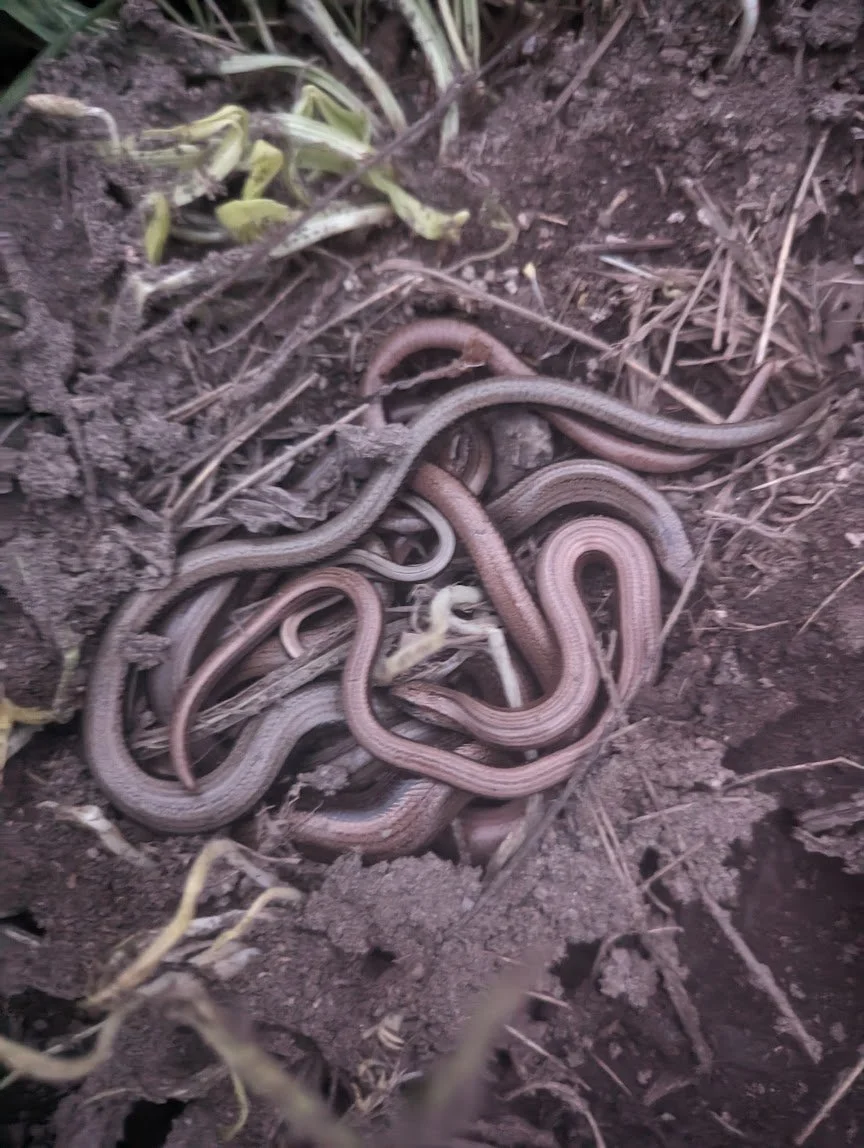
In the UK, the four widespread species—Slow-worm, Common Lizard, Grass Snake, and Adder—are protected under the Wildlife and Countryside Act 1981 against intentional killing and injury. Our rarer species, the Sand Lizard and Smooth Snake, receive full legal protection, making it an offence to disturb them or damage their habitats.
We provide comprehensive reptile services to ensure your site clearance and development activities proceed without breaching wildlife legislation.
Habitat Suitability Assessments: A preliminary walkover to identify "hotspots" such as south-facing banks, log piles, and mosaic habitats that may support reptile populations.
Presence/Absence Surveys: We deploy artificial refugia (heat-retaining felt or corrugated tin mats) across your site. Our ecologists then conduct a minimum of seven site visits under optimal weather conditions to check for reptiles.
Population Assessments: If reptiles are found, we can extend our survey effort to estimate population size, which is often required by planning authorities to determine the scale of mitigation needed.
Translocation & Mitigation: Where impacts are unavoidable, we design and implement translocation programmes. This involves "trapping out" reptiles using exclusion fencing and moving them to a safe, pre-prepared receptor site.
Habitat Creation: We provide technical advice on creating hibernacula (winter shelters), log piles, and basking banks to enhance your site's value for local biodiversity.
In the UK, the four widespread species—Slow-worm, Common Lizard, Grass Snake, and Adder—are protected under the Wildlife and Countryside Act 1981 against intentional killing and injury. Our rarer species, the Sand Lizard and Smooth Snake, receive full legal protection, making it an offence to disturb them or damage their habitats.
We provide comprehensive reptile services to ensure your site clearance and development activities proceed without breaching wildlife legislation.
Habitat Suitability Assessments: A preliminary walkover to identify "hotspots" such as south-facing banks, log piles, and mosaic habitats that may support reptile populations.
Presence/Absence Surveys: We deploy artificial refugia (heat-retaining felt or corrugated tin mats) across your site. Our ecologists then conduct a minimum of seven site visits under optimal weather conditions to check for reptiles.
Population Assessments: If reptiles are found, we can extend our survey effort to estimate population size, which is often required by planning authorities to determine the scale of mitigation needed.
Translocation & Mitigation: Where impacts are unavoidable, we design and implement translocation programmes. This involves "trapping out" reptiles using exclusion fencing and moving them to a safe, pre-prepared receptor site.
Habitat Creation: We provide technical advice on creating hibernacula (winter shelters), log piles, and basking banks to enhance your site's value for local biodiversity.